TheWebCHEMIST
A Chemist's view for Herbal Health Management...
Welcome to online Medical Tips , Discussion and Papers on Common Diseas and their remedies in "TheWebCHEMIST"
I am a Qualified CHEMIST and an ENVIRONMENTALIST ....having 25 years field experience while working in CNRS France, PCSIR Laboratories Karachi and Scientific Services of MoD Pakistan Navy.
"
In this site, you'll find background informations .......about Medical Problems,Tips on Couping with the problems , Discussion on different aspect of medical treatment duly reviewed by qualified doctors and with courtesy of WEB MEDICAL SITES OF THE INTERNET.... just for promoting greater understanding regarding diseases their cures and the long and untiring efforts of Medical professional in this connection.
________________________________
__________________________________
A Week of Treatment Provides Lasting Benefits
Antibiotics Aid Heart Patients
By Jennifer Warner
WebMD Medical News Reviewed By Michael Smith, MD
on Monday, October 01, 2001
Aug. 19, 2002 -- Giving antibiotics for even a short time after a heart attack or chest pain may keep heart patients from coming back to the hospital for up to a year.
A new study adds more evidence to the theory that infection and inflammation play important roles in the development of heart disease. And antibiotics may be valuable weapons in countering that risk.
In the largest study of its kind to date, researchers found heart patients who took antibiotics had a much lower risk of returning to the hospital due to a heart attack or severe chest pain compared with those who didn't take the infection fighters.
The study involved 325 men and women who had been admitted to the hospital for a heart attack or chest pain. Within 48 hours of admission, the patients were given either an antibiotic (amoxicillin or Zithromax) or a placebo for one week.
A year later, those who received an antibiotic were 36% less likely to be rehospitalized for a heart attack or chest pain than those who took a placebo.
"It is an interesting proposal that antibiotics can affect a condition that has always been regarded as noninfectious," says study author Michael A. Mendall, MD, of the Mayday Hospital in Croydon, England, in a news release.
The question, Mendall says, is whether the antibiotics are working by fighting infection or inflammation in these patients.
Recent studies have suggested that substances in the body that indicate inflammation, such as C-reactive protein, fibrinogen, and white blood cells, are effective markers of heart disease risk. In addition, research has shown that infection with two common bacteria, Helicobacter pylori (H. pylori) and Chlamydia pneumoniae, are associated with heart disease.
But in this study, the researchers found treatment with the antibiotics produced heart benefits regardless of whether the person was infected with either of the bacterium.
"This implies that these antibiotics are not working against these organisms," says Mendall. The antibiotics may be acting against other organisms or may have their own anti-inflammatory properties.
Researchers say more research is needed to determine what is responsible for the lasting beneficial effects of short-term antibiotic treatment.
Their study appears in today's rapid access issue of Circulation: Journal of the American Heart Association.
© 2002 WebMD Inc. All rights reserved.
Askari A. Kazmi
Consultant
12 Ways to Feel and Look Younger
By Star Lawrence
WebMD Feature
Experts on aging agree -- there are positive steps you can take to make your "golden years" healthier and more enjoyable. And, they might just add as much as a decade or more to your life... So read on, and act now!
Phase Out Destructive Habits
1. The single best thing you can do for your health and longevity is quit smoking. Smoking has been indicted for a laundry list of ills from heart disease to lung disorders, all of which can foil your longevity plans.
2. Drink only in moderation. Alcohol infuses every cell, damaging genes and inflaming your liver. A glass of wine a day for women and maybe two for men, but no more, may be mildly beneficial.
3. Get your Zzzz's. Your body needs down time to repair cells and rest your heart. And your mind needs dreaming to stay sane.
Create a Diet and Supplement Regimen Right for You
4. Find a doctor who specializes in geriatrics or anti-aging. Barbara M. Morris, RPh, author of Boomers Can Really Put Old on Hold, recommends an anti-aging doctor. But according to Marc R. Blackman, MD, chief of the laboratory of clinical investigation of the National Center for Complementary and Alternative Medicine (part of the National Institutes of Health), a geriatrician would be more mainstream and recommend fewer unproven treatments. "Anti-aging is like saying anti-puberty or anti-pregnancy. This is a natural process," he says. Whatever his or her style, your new doctor may recommend yearly assessment of various biomarkers, including lipids, DHEA, estrogen, cortisol, thyroid, lung function, and micronutrient assays.
5. Cut saturated fat, up omega-3 fats. It's gospel by now: eat less or no red meat; lose the cake and ice cream; consume more complex carbs, such as whole grains, fruits, and vegetables; and get plenty of fatty fish. The healthy fats in salmon, mackerel, and sardines help keep oxygen free-radical molecules from damaging your cells.
6. Consider moderating your total food intake. Studies in rats show that a 30% calorie restriction means longer life (no, it doesn't just seem longer!). Blackman also cites studies in rhesus monkeys showing a gain in years from a reduction in food. Obviously, losing excess pounds means less strain on your system.
7. Be careful when tweaking your hormones. Morris swears by controversial human growth hormone -- for her. Blackman is no fan. "There have been big studies to determine the relationship between decreases in human growth hormone and thinner bones, more body fat, and mood swings. Giving growth hormone can build muscle, but it has not been shown that the muscle is any stronger." HGH has also been associated with water retention, carpal tunnel syndrome, high blood pressure, and blood-sugar fluctuations. "[HGH science] is not at a point where any responsible provider could recommend it," Blackman says. And what about the other substance -- a steroid called DHEA -- often recommended for aging? "Dramatically less evidence than HGH!" exclaims Blackman. As for estrogen and progesterone replacement, it's been in all the papers. The combo therapy may increase, rather than cut, the risk of cancer and heart disease. Many natural alternatives to these substances exist -- your own situation should dictate your decision, but always consult your doctor.
8. Supplement, supplement, supplement. Most of us suffer from "overconsumption malnutrition" -- too much of the wrong things, Morris says. She takes a fistful of vitamins and minerals each morning. Even the cautious American Medical Association recently endorsed taking a daily multivitamin. In addition to the effective antioxidant vitamin C, Morris says CoQ10, vitamin E, alpha lipoic acid (another antioxidant), and perhaps some of those "mental acuity" mixtures in the health-food store should be in your medicine cabinet. Again, your doctor can help you fashion a routine.
Exercise Your Body, Imagination, and Options
9. Reprogram your vision of old age. A study at Yale recently showed that those with a positive view of growing older lived seven years longer than those who griped about it. Morris works with young people and "they forget things all the time and never refer to 'having to a junior moment.'"
10. Kick guilt out of your life! Laura Berman Fortgang, author of Living Your Best Life, says: "Be future-minded. Guilt and regrets are part of the past. Evolving and changing is how we stay young."
11. Don't be afraid to make a big change. Fortgang says it's never too late to move, join the Peace Corps, change careers, get married, or get a divorce. "Don't say you're too old," she says. "Sometimes [earlier] decisions need to be changed." She and Morris also say plastic surgery can be life-enhancing if you do it to look and feel better, not to change your life overnight.
12. Morris also half-jokingly advises that people never retire. "Retirement is a contagious, debilitating disease." Take some time off for a vacation and smell the roses, she advises. But don't get so intoxicated by the roses that you don't come back and do something useful. "Those roses could turn into daisies," she says, "as in pushing up daisies."
Published Oct. 28, 2002.
Askari A. Kazmi
Consultant
___________________________________________
12 Tips to Prevent Cold and Flu the "Natural" Way
WebMD Feature
Reviewed by Charlotte E. Grayson, MD
Relax
Since there are no known cures for colds and flu, prevention must be your goal. A proactive approach to warding off colds and flu is apt to make your whole life healthier. The most effective way to prevent flu, frankly, is to get the flu shot. It may not be natural, but it works better than anything else. But there are other strategies you can employ as well. WebMD went to Charles B. Inlander, President of The People's Medical Society, for suggestions you may want to try:
#1 Wash Your Hands
Most cold and flu viruses are spread by direct contact. Someone who has the flu sneezes onto their hand, and then touches the telephone, the keyboard, a kitchen glass. The germs can live for hours -- in some cases weeks -- only to be picked up by the next person who touches the same object. So wash your hands often. If no sink is available, rub your hands together very hard for a minute or so. That also helps break up most of the cold germs.
#2 Don't Cover Your Sneezes and Coughs With Your Hands
Because germs and viruses cling to your bare hands, muffling coughs and sneezes with your hands results in passing along your germs to others. When you feel a sneeze or cough coming, use a tissue, then throw it away immediately. If you don't have a tissue, turn your head away from people near you and cough into the air.
^ Back to top
#3 Don't Touch Your Face
Cold and flu viruses enter your body through the eyes, nose, or mouth. Touching their faces is the major way children catch colds, and a key way they pass colds on to their parents.
^ Back to top
#4 Drink Plenty of Fluids
Water flushes your system, washing out the poisons as it rehydrates you. A typical, healthy adult needs eight 8-ounce glasses of fluids each day. How can you tell if you're getting enough liquid? If the color of your urine runs close to clear, you're getting enough. If it's deep yellow, you need more fluids.
^ Back to top
#5 Take a Sauna
Researchers aren't clear about the exact role saunas play in prevention, but one 1989 German study found that people who steamed twice a week got half as many colds as those who didn't. One theory: When you take a sauna you inhale air hotter than 80 degrees, a temperature too hot for cold and flu viruses to survive.
^ Back to top
#6 Get Fresh Air
A regular dose of fresh air is important, especially in cold weather when central heating dries you out and makes your body more vulnerable to cold and flu viruses. Also, during cold weather more people stay indoors, which means more germs are circulating in crowded, dry rooms.
^ Back to top
#7 Do Aerobic Exercise Regularly
Aerobic exercise speeds up the heart to pump larger quantities of blood; makes you breathe faster to help transfer oxygen from your lungs to your blood; and makes you sweat once your body heats up. These exercises help increase the body's natural virus-killing cells.
^ Back to top
#8 Eat Foods Containing Phytochemicals
"Phyto" means plants, and the natural chemicals in plants give the vitamins in food a supercharged boost. So put away the vitamin pill, and eat dark green, red, and yellow vegetables and fruits.
^ Back to top
#9 Eat Yogurt
Some studies have shown that eating a daily cup of low-fat yogurt can reduce your susceptibility to colds by 25 percent. Researchers think the beneficial bacteria in yogurt may stimulate production of immune system substances that fight disease.
^ Back to top
#10 Don't Smoke
Statistics show that heavy smokers get more severe colds and more frequent ones.
Even being around smoke profoundly zaps the immune system. Smoke dries out your nasal passages and paralyzes cilia. These are the delicate hairs that line the mucous membranes in your nose and lungs, and with their wavy movements, sweep cold and flu viruses out of the nasal passages. Experts contend that one cigarette can paralyze cilia for as long as 30 to 40 minutes.
^ Back to top
#11 Cut Alcohol Consumption
Heavy alcohol use destroys the liver, the body's primary filtering system, which means that germs of all kinds won't leave your body as fast. The result is, heavier drinkers are more prone to initial infections as well as secondary complications. Alcohol also dehydrates the body -- it actually takes more fluids from your system than it puts in.
^ Back to top
#12 Relax
If you can teach yourself to relax, you can activate your immune system on demand. There's evidence that when you put your relaxation skills into action, your interleukins -- leaders in the immune system response against cold and flu viruses -- increase in the bloodstream. Train yourself to picture an image you find pleasant or calming. Do this 30 minutes a day for several months. Keep in mind, relaxation is a learnable skill, but it is not doing nothing. People who try to relax, but are in fact bored, show no changes in blood chemicals.
^ Back to top
The People's Medical Society is a nonprofit consumer health advocacy organization. Charles B. Inlander is president, and co-author of 77 Ways to Beat Cold and Flu.
12 Tips to Battle Colds and Flu the "Natural" Way
WebMD Feature
Reviewed by Charlotte E. Grayson, MD
With no cure in sight for the cold or the flu, current treatments can at best bring symptom relief or shorten the duration of those symptoms. You can take one of a variety of medications that may help relieve your symptoms. Or you can take the natural approach. WebMD went to Charles B. Inlander, President of The People's Medical Society, for some home remedies that may speed your recovery, and help you feel better along the way.
#1 Know When Not To Treat Symptoms
Believe it or not, those annoying symptoms you're experiencing are part of the natural healing process -- evidence that the immune system is battling illness. For instance, a fever is your body's way of trying to kill viruses in a hotter-than-normal environment. Also, a fever's hot environment makes germ-killing proteins in your blood circulate more quickly and effectively. Thus, if you endure a moderate fever for a day or two, you may actually get well faster. Coughing is another productive symptom; it clears your breathing passages of thick mucus that can carry germs to your lungs and the rest of your body. Even that stuffy nose is best treated mildly or not at all. A decongestant, like Sudafed, restricts flow to the blood vessels in your nose and throat. But often you want the increase blood flow because it warms the infected area and helps secretions carry germs out of your body.
#2 Blow Your Nose Often (And the Right Way)
It's important to blow your nose regularly when you have a cold rather than sniffling mucus back into your head. But when you blow hard, pressure can carry germ-carrying phlegm back into your ear passages, causing earache. The best way to blow your nose: Press a finger over one nostril while you blow gently to clear the other.
#3 Treat That Stuffy Nose With Warm Salt Water
Salt-water rinsing helps break nasal congestion, while also removing virus particles and bacteria from your nose. Here's a popular recipe:
Mix 1/4 teaspoon salt and 1/4 teaspoon baking soda in 8 ounces of warm water. Use a bulb syringe to squirt water into the nose. Hold one nostril closed by applying light finger pressure while squirting the salt mixture into the other nostril. Let it drain. Repeat 2-3 times, then treat the other nostril.
#4 Stay Warm and Rested
Staying warm and resting when you first come down with a cold or the flu helps your body direct its energy toward the immune battle. This battle taxes the body. So give it a little help by lying down under a blanket.
#5 Gargle
Gargling can moisten a sore throat and bring temporary relief. Try a teaspoon of salt dissolved in warm water, four times daily. To reduce the tickle in your throat, try an astringent gargle -- such as tea that contains tannin -- to tighten the membranes. Or use a thick, viscous gargle made with honey, popular in folk medicine. Seep one tablespoon of raspberry leaves or lemon juice in two cups of hot water; mix with one teaspoon of honey. Let the mixture cool to room temperature before gargling.
#6 Drink Hot Liquids
Hot liquids relieve nasal congestion, prevent dehydration, and soothe the uncomfortably inflamed membranes that line your nose and throat. If you're so congested you can't sleep at night, try a hot toddy, an age-old remedy. Make a cup of hot herbal tea. Add one teaspoon of honey and 1 small shot (about 1 ounce) of whiskey or bourbon. Limit yourself to one. Too much alcohol inflames those membranes and is counterproductive.
#7 Take a Steamy Shower
Steamy showers moisturize your nasal passages and relax you. If you're dizzy from the flu, run a steamy shower while you sit on a chair nearby and take a sponge bath.
#8 Use a Salve Under Your Nose
A small dab of mentholated salve under your nose can open breathing passages and help restore the irritated skin at the base of the nose. Menthol, eucalyptus and camphor all have mild numbing ingredients that may help relieve the pain of a nose rubbed raw.
#9 Apply Hot or Cold Packs Around Your Congested Sinuses
Either temperature works. You can buy reusable hot or cold packs at a drugstore. Or make your own. Take a damp washcloth and heat it for 55 seconds in a microwave (test the temperature first to make sure it's right for you.) Or take a small bag of frozen peas to use as a cold pack.
^ Back to top
#10 Sleep With an Extra Pillow Under Your Head
This will help relieve congested nasal passages. If the angle is too awkward, try placing the pillows between the mattress and the box springs to create a more gradual slope.
#11 Don't Fly Unless Necessary
There's no point adding stress to your already stressed-out upper respiratory system, and that's what the change in air pressure will do. Flying with cold or flu congestion can temporarily damage your eardrums as a result of pressure changes during takeoff and landing. If you must fly, use a decongestant and carry a nasal spray with you to use just before takeoff and landing. Chewing gum and swallowing frequently can also help relieve pressure.
#12 Eat Infection-Fighting Foods
Here are some good foods to eat when you're battling a cold or flu:
Bananas: Soothe upset stomachs.
Bell Peppers: Loaded with vitamin C.
Blueberries: Curbs diarrhea, high in natural aspirin. (May lower fevers and help with the aches and pains.)
Carrots: Loaded with beta-carotene.
Chili Peppers: Can open sinuses, and help break up mucus in the lungs.
Cranberries: Help prevent bacteria from sticking to cells lining the bladder and urinary tract.
Mustard & Horseradish: Helps break up mucus in air passages.
Onion: Has phytochemicals purported to help the body clear bronchitis and other infections.
Rice: Curbs diarrhea.
Tea: Black and green tea (not herbals) contain catechin, a phytochemical purported to have natural antibiotic and anti-diarrhea effects.
Remember, serious conditions can masquerade as the common cold:
sinus infections, bronchitis, meningitis, strep throat, and asthma. If you have severe symptoms, or feel sicker with each passing day, call your doctor.
The People's Medical Society is a nonprofit consumer health advocacy organization. Charles B. Inlander is president, and co-author of 77 Ways to Beat Cold and Flu.
5 Recipes to Soothe You
WebMD Feature
Reviewed by Charlotte E. Grayson, MD
We still have a lot to learn about the healing powers of food. But this much we know:
Chicken soup does help clear nasal clog. Ginger seems to settle stomachs. Dark greens such as spinach are loaded with vitamins A and C. And salmon is a great source of omega-3 fatty acids, which have an anti-inflammatory effect. Quite simply, a well-nourished immune system is better able to ward off infections.
So eat healthy this winter. And enjoy these recipes from the kitchen of Charlotte Grayson, MD, our senior medical editor at WebMD.
Charlotte's Chicken Soup
1 chicken, cut into 8-10 pieces (remove skin, leave bone in)
8 cups of chicken broth (homemade is preferable, but unsalted, low-fat canned is fine.**)
3 large cloves of garlic, chopped
1/2 cup chopped onion
2 carrots, peeled, thinly sliced
2 celery stalks, sliced
(If your children won't eat the above vegetables, you may leave them out.)
8 ounces dried wide egg noodles or 1 cup uncooked long grain rice
1/2 cup finely chopped fresh parsley
2 tablespoons fresh thyme or 2 teaspoons dried thyme
Pat chicken parts dry. Season pieces with salt and pepper. Brown chicken parts in a heavy Dutch oven with 1 teaspoon of canola oil over medium-high heat for about 6-8 minutes, turning once.
Add chicken broth to the pot. Bring to boil. Reduce heat; cover partially and simmer until chicken is cooked through, about 20 minutes.
Using tongs, transfer chicken to large bowl. Cool chicken and broth slightly. Discard bones from chicken. Cut or pull apart chicken meat into bite-sized pieces and reserve.
Spoon fat off top of chicken broth. Return broth to simmer. Add onion, carrots, celery, and thyme. Simmer until vegetables soften, about 8 minutes. (Can be prepared 1 day ahead, but be sure to store broth and meat separately in the fridge.)
Stir in noodles, parsley, and reserved chicken. Simmer until noodles are tender, about 5 minutes. If using rice, simmer until rice is done. Season soup to taste with salt and pepper. Ladle into soup bowls and garnish if you like with parsley.
** Canned soup can be made to taste more homemade by simmering it for about 45 minutes with a couple of celery stalks, carrots, half of an onion chopped, a bit of garlic, some peppercorns, and a bay leaf. Strain before using.
Ginger-Cinnamon Tea
(Ginger is purported to soothe an upset stomach.)
1/2 cup thinly sliced fresh ginger
6 cups water
2 cinnamon sticks
2 tablespoons honey or brown sugar
lemon wedges for garnish if desired
In a saucepan, simmer ginger, cinnamon, and water 20 minutes, or more for stronger tea. Add honey or sugar and strain tea through a sieve.
^ Back to top
Hot Lemonade
(Great for a sore throat.)
4 lemons
several slices of ginger root
honey to taste
Juice several lemons, then scrub the peel well. Slice it thinly, and add to the juice.
Cover all with plenty of boiling water, cover, and steep until cool.
For added benefit, add several slices of ginger root before covering with water.
Strain off the liquid, add honey and additional water to taste. Drink hot.
^ Back to top
Mixed Greens and Fennel with Ginger Dressing
(Ginger is purported to be great for a cold. So is fennel.)
1 bag of fresh spinach or mixed salad greens
2 fennel bulbs (cleaned, cut in half lengthwise, and sliced thinly crosswise)
For the dressing:
2 scallions, finely chopped
1 garlic clove, minced
2 tablespoons oriental sesame oil
2 tablespoons soy sauce
2 tablespoons rice vinegar
1 tablespoon chopped, peeled fresh ginger
1 tablespoon honey
1/4 cup canola oil
Blend first seven dressing ingredients in food processor. With machine running, gradually add oil and process until well blended. (Can be prepared 1 day ahead. Cover and refrigerate. Let stand 30 minutes at room temperature before using.)
Toss fennel and greens with dressing. Enjoy!
Slow Roasted Salmon with Fennel Orange Salsa
4 Salmon filets with skin on
salt, pepper to taste
3 tablespoons fresh herbs (I recommend chives, rosemary, or thyme.)
For the salsa:
1 fennel bulb finely diced, plus 1 tablespoon minced fennel leaves
1/2 cup finely diced oranges
10 green olives pitted and minced
1 tablespoon fresh orange juice
1 teaspoon fresh lemon juice, or to taste
Preheat oven to 250 degrees. While it's heating, make the salsa.
In a medium bowl, stir together the fennel bulb and leaves, the diced orange, the olives, the juices, and salt and pepper to taste.
Then, place salmon skin side down on a baking sheet sprayed with olive oil. Brush fish with a bit more olive oil, sprinkle salt and pepper, and press the herbs into the flesh. Set aside.
When the oven is hot, "slow-roast" the salmon for 17 minutes. It may not look done, but it is! Serve salmon with salsa on the side.
6 Tips for Fast Relief -- Ask Your Pharmacist
WebMD Feature
Reviewed by Charlotte E. Grayson, MD
Most cold and flu drugs attack symptoms, not the specific viruses. They don't cure, but they can bring relief, lighter symptoms, or shorten your illness. There's no one right way to treat a cold or the flu. But here are some questions to ask your pharmacist to get the right over-the-counter medication for you.
#1 Should I take a decongestant or an antihistamine?
This depends on your symptoms. If you have nasal or sinus congestion, then a decongestant can be helpful. If you have drainage -- either a runny nose or postnasal drip or itchy watery eyes -- then an antihistamine may be helpful. Over-the-counter antihistamines often make people drowsy; decongestants make people hyper or keep them awake. Antihistamines can make secretions thick, which can be a problem for people with asthma. Keep in mind that both these medications may interact with other drugs you may be taking for conditions such as heart disease, and they may worsen some conditions. Discuss with your doctor or pharmacist which cold medication may be best for you.
#2 Is it safe to take a decongestant if I have high blood pressure?
Decongestants can increase blood pressure and heart rate, and increase the risk of heart attacks and strokes. Pseudoephedrine is the primary oral decongestant available. In general, if your blood pressure is well controlled with medications, then a decongestant shouldn't be a problem as long as you monitor your blood pressure. This may not be true with certain types of blood pressure medications such as beta-blockers. In these cases, consider nasal sprays. Check with your doctor or pharmacist about what may be best for you.
#3 How often should I use nasal spray?
Nasal decongestants work fast to open breathing passages. But if you use them for more than three days in a row, you may suffer a "rebound effect," and end up more congested than you were at the start. Some doctors suggest using a saline spray instead of a medicated spray. Saline spray works more slowly but has no rebound effect.
#4 What's the deal with cough medicine?
An occasional cough may clear the lung of pollutants and excess phlegm. A persistent cough should be diagnosed and treated specifically. On the shelf you'll find numerous cough medicines with various combinations of decongestants, antihistamines, analgesics/antipyretics, cough suppressants, and expectorants. Ask your pharmacist which combination, if any, would be right for you.
#5 What should I take for fever and aches?
Fever may be a good thing. It helps the body fight off infection by suppressing the growth of bacteria and viruses and activating the immune system. Doctors no longer recommend suppressing fever for most people, except perhaps for the very young, the very old, and those with heart disease or lung disease. However, if you are uncomfortable then it's fine to take medications. Young people (including those in their early 20s) should avoid aspirin. Acetaminophen (Tylenol and others) or the numerous other medicines like ibuprofen (Advil and others) are your best choices. Each has their own risks, so check with your doctor or pharmacist as to which may be best for you. Be careful not to overdose! These drugs are often mixed in with other cough and cold and flu remedies you may also be taking. Your pharmacist can help you make the right choice.
#6 What's best for my sore throat?
Medicated lozenges and gargles can temporarily soothe a sore throat. An FDA advisory panel has said that these ingredients are safe: benzocaine, hexylresorcinols, menthol, and phenol and sodium phenolate compounds. The panel suggests you avoid aspirin chewing gum. There's insufficient evidence that topically applied aspirin relieves pain, and it may irritate mucus membranes. Don't use lozenges or gargles for more than a few days. The medications could mask signs of strep throat, a bacterial infection that should be treated with antibiotics.
Things to Do When Your Child Is Home Sick
WebMD Feature
Reviewed by Charlotte E. Grayson, MD
Children laid low by a cold or the flu usually don't need to stay in bed all day. In fact, you probably can't keep them there! But they should avoid vigorous activity, and rest often. Here are some suggestions for keeping your children occupied, while giving them the rest and nourishment they need.
#1 Have a Tea Party for Two, or Juice Some Fresh Lemons for Lemonade
Your child should drink extra fluids when sick, so find a way to make this fun. Avoid milk because it may thicken their secretions.
#2 Take a Steam Bath
Make pretend you're at a spa or a gym. Wrap your child in a warm towel and sit together on chairs in the bathroom while you run a steamy shower. The steam will moisten your child's nasal membranes, and relax you both. You can also add a capful of vapor bath (ask your pharmacist) to the tub for a mentholated steam.
#3 Watch a Disney Movie
Yes, we all know it's not a good idea to let children watch too much television. But when your child is sick, this is one activity that may engross her mind while letting her body rest. Let your child lie on the couch, head elevated on a pillow, to watch the show. This will help drain nasal passages.
#4 Make Little Things
These are good days to pull out a small box of Legos, Tinkertoys, or blocks. Ask your child to build something -- quietly -- on top of the bed, or on the living room carpet.
#5 Make Some Chicken Soup
Hot liquids are helpful decongestants. If you're busy, open a can of chicken broth and let your child help chop favorite veggies, such as carrots or celery, to simmer in it.
#6 Sketch Pictures
A simple sketch pad and some colored pencils are all your child needs to create art without a mess. Children can even rest in bed while they draw!
Why We Catch Colds During Flights
Confined Space Most Likely to Blame
By Jeanie Davis
WebMD Medical News Reviewed By Gary Vogin, MD
July 23, 2002 -- Get a cold nearly every time you fly? Well, it's not because of the type of air on board. Whether your plane circulates fresh air -- or recirculates cabin air -- doesn't seem to make a difference, a new study shows. More likely, it's the confined space of the aircraft, says one expert.
In recent years, new commercial aircraft have been designed to recirculate approximately 50% of the cabin air to increase fuel efficiency. But it's not been known whether air recirculation increases the transmission of infectious disease.
But some studies have shown higher rates of the common cold among people working in buildings that recirculate air, writes Jessica Nutik Zitter, MD, MPH, a researcher at the University of California, San Francisco. Her paper appears in this week's Journal of the American Medical Association.
In their study, Zitter and colleagues included nearly 1,100 passengers boarding flights on airplanes that had the newer recirculated air systems and on planes that still used fresh air for ventilation. They made follow-up phone calls five to seven days after the flights, asking about symptoms of upper-respiratory infection.
Their findings: Passengers aboard airplanes that recirculated air were more likely to have sinus problems. But as far as the common cold, 21% of passengers aboard fresh-air planes reported colds, compared with 19% of people breathing recirculated air.
The findings suggest that if there is increased risk of common colds among passengers, the main route for transmission is not air recirculation, Zitter writes.
It's the confined space of the aircraft that's probably the main reason why people get colds on airplanes, says Derek Johnson, MD, assistant professor of pediatric allergy and clinical immunology at Temple University Children's Medical Center in Philadelphia.
He agreed to review Zitter's study for WebMD.
"It doesn't matter if you're breathing recirculated or fresh air. If the germs are there, you're going to get sick," he tells WebMD.
Droplets in the air, like when somebody sneezes, are one of the big causes of colds. But touching stuff that people with colds have touched -- like a deck of cards, a newspaper, trays, cups, cans -- counts even more. Touch a cold virus germ, then touch your face, and you've exposed yourself to the virus.
"I don't think people give enough credit to that," he tells WebMD. "People don't realize they touch their face many, many times during the day. It's very easy to transmit those viruses, especially in a confined environment -- whether it's an airplane, an office, or at home."
Also, the stress of travel may lower immunity enough to make you more susceptible, he adds.
To help prevent catching colds, wash hands frequently -- and avoid touching your face.
Askari A. Kazmi
Consultant
"
In this site, you'll find background informations .......about Medical Problems,Tips on Couping with the problems , Discussion on different aspect of medical treatment duly reviewed by qualified doctors and with courtesy of WEB MEDICAL SITES OF THE INTERNET.... just for promoting greater understanding regarding diseases their cures and the long and untiring efforts of Medical professional in this connection.
________________________________
__________________________________
A Week of Treatment Provides Lasting Benefits
Antibiotics Aid Heart Patients
By Jennifer Warner
WebMD Medical News Reviewed By Michael Smith, MD
on Monday, October 01, 2001
Aug. 19, 2002 -- Giving antibiotics for even a short time after a heart attack or chest pain may keep heart patients from coming back to the hospital for up to a year.
A new study adds more evidence to the theory that infection and inflammation play important roles in the development of heart disease. And antibiotics may be valuable weapons in countering that risk.
In the largest study of its kind to date, researchers found heart patients who took antibiotics had a much lower risk of returning to the hospital due to a heart attack or severe chest pain compared with those who didn't take the infection fighters.
The study involved 325 men and women who had been admitted to the hospital for a heart attack or chest pain. Within 48 hours of admission, the patients were given either an antibiotic (amoxicillin or Zithromax) or a placebo for one week.
A year later, those who received an antibiotic were 36% less likely to be rehospitalized for a heart attack or chest pain than those who took a placebo.
"It is an interesting proposal that antibiotics can affect a condition that has always been regarded as noninfectious," says study author Michael A. Mendall, MD, of the Mayday Hospital in Croydon, England, in a news release.
The question, Mendall says, is whether the antibiotics are working by fighting infection or inflammation in these patients.
Recent studies have suggested that substances in the body that indicate inflammation, such as C-reactive protein, fibrinogen, and white blood cells, are effective markers of heart disease risk. In addition, research has shown that infection with two common bacteria, Helicobacter pylori (H. pylori) and Chlamydia pneumoniae, are associated with heart disease.
But in this study, the researchers found treatment with the antibiotics produced heart benefits regardless of whether the person was infected with either of the bacterium.
"This implies that these antibiotics are not working against these organisms," says Mendall. The antibiotics may be acting against other organisms or may have their own anti-inflammatory properties.
Researchers say more research is needed to determine what is responsible for the lasting beneficial effects of short-term antibiotic treatment.
Their study appears in today's rapid access issue of Circulation: Journal of the American Heart Association.
© 2002 WebMD Inc. All rights reserved.
Askari A. Kazmi
Consultant
12 Ways to Feel and Look Younger
By Star Lawrence
WebMD Feature
Experts on aging agree -- there are positive steps you can take to make your "golden years" healthier and more enjoyable. And, they might just add as much as a decade or more to your life... So read on, and act now!
Phase Out Destructive Habits
1. The single best thing you can do for your health and longevity is quit smoking. Smoking has been indicted for a laundry list of ills from heart disease to lung disorders, all of which can foil your longevity plans.
2. Drink only in moderation. Alcohol infuses every cell, damaging genes and inflaming your liver. A glass of wine a day for women and maybe two for men, but no more, may be mildly beneficial.
3. Get your Zzzz's. Your body needs down time to repair cells and rest your heart. And your mind needs dreaming to stay sane.
Create a Diet and Supplement Regimen Right for You
4. Find a doctor who specializes in geriatrics or anti-aging. Barbara M. Morris, RPh, author of Boomers Can Really Put Old on Hold, recommends an anti-aging doctor. But according to Marc R. Blackman, MD, chief of the laboratory of clinical investigation of the National Center for Complementary and Alternative Medicine (part of the National Institutes of Health), a geriatrician would be more mainstream and recommend fewer unproven treatments. "Anti-aging is like saying anti-puberty or anti-pregnancy. This is a natural process," he says. Whatever his or her style, your new doctor may recommend yearly assessment of various biomarkers, including lipids, DHEA, estrogen, cortisol, thyroid, lung function, and micronutrient assays.
5. Cut saturated fat, up omega-3 fats. It's gospel by now: eat less or no red meat; lose the cake and ice cream; consume more complex carbs, such as whole grains, fruits, and vegetables; and get plenty of fatty fish. The healthy fats in salmon, mackerel, and sardines help keep oxygen free-radical molecules from damaging your cells.
6. Consider moderating your total food intake. Studies in rats show that a 30% calorie restriction means longer life (no, it doesn't just seem longer!). Blackman also cites studies in rhesus monkeys showing a gain in years from a reduction in food. Obviously, losing excess pounds means less strain on your system.
7. Be careful when tweaking your hormones. Morris swears by controversial human growth hormone -- for her. Blackman is no fan. "There have been big studies to determine the relationship between decreases in human growth hormone and thinner bones, more body fat, and mood swings. Giving growth hormone can build muscle, but it has not been shown that the muscle is any stronger." HGH has also been associated with water retention, carpal tunnel syndrome, high blood pressure, and blood-sugar fluctuations. "[HGH science] is not at a point where any responsible provider could recommend it," Blackman says. And what about the other substance -- a steroid called DHEA -- often recommended for aging? "Dramatically less evidence than HGH!" exclaims Blackman. As for estrogen and progesterone replacement, it's been in all the papers. The combo therapy may increase, rather than cut, the risk of cancer and heart disease. Many natural alternatives to these substances exist -- your own situation should dictate your decision, but always consult your doctor.
8. Supplement, supplement, supplement. Most of us suffer from "overconsumption malnutrition" -- too much of the wrong things, Morris says. She takes a fistful of vitamins and minerals each morning. Even the cautious American Medical Association recently endorsed taking a daily multivitamin. In addition to the effective antioxidant vitamin C, Morris says CoQ10, vitamin E, alpha lipoic acid (another antioxidant), and perhaps some of those "mental acuity" mixtures in the health-food store should be in your medicine cabinet. Again, your doctor can help you fashion a routine.
Exercise Your Body, Imagination, and Options
9. Reprogram your vision of old age. A study at Yale recently showed that those with a positive view of growing older lived seven years longer than those who griped about it. Morris works with young people and "they forget things all the time and never refer to 'having to a junior moment.'"
10. Kick guilt out of your life! Laura Berman Fortgang, author of Living Your Best Life, says: "Be future-minded. Guilt and regrets are part of the past. Evolving and changing is how we stay young."
11. Don't be afraid to make a big change. Fortgang says it's never too late to move, join the Peace Corps, change careers, get married, or get a divorce. "Don't say you're too old," she says. "Sometimes [earlier] decisions need to be changed." She and Morris also say plastic surgery can be life-enhancing if you do it to look and feel better, not to change your life overnight.
12. Morris also half-jokingly advises that people never retire. "Retirement is a contagious, debilitating disease." Take some time off for a vacation and smell the roses, she advises. But don't get so intoxicated by the roses that you don't come back and do something useful. "Those roses could turn into daisies," she says, "as in pushing up daisies."
Published Oct. 28, 2002.
Askari A. Kazmi
Consultant
___________________________________________
12 Tips to Prevent Cold and Flu the "Natural" Way
WebMD Feature
Reviewed by Charlotte E. Grayson, MD
Relax
Since there are no known cures for colds and flu, prevention must be your goal. A proactive approach to warding off colds and flu is apt to make your whole life healthier. The most effective way to prevent flu, frankly, is to get the flu shot. It may not be natural, but it works better than anything else. But there are other strategies you can employ as well. WebMD went to Charles B. Inlander, President of The People's Medical Society, for suggestions you may want to try:
#1 Wash Your Hands
Most cold and flu viruses are spread by direct contact. Someone who has the flu sneezes onto their hand, and then touches the telephone, the keyboard, a kitchen glass. The germs can live for hours -- in some cases weeks -- only to be picked up by the next person who touches the same object. So wash your hands often. If no sink is available, rub your hands together very hard for a minute or so. That also helps break up most of the cold germs.
#2 Don't Cover Your Sneezes and Coughs With Your Hands
Because germs and viruses cling to your bare hands, muffling coughs and sneezes with your hands results in passing along your germs to others. When you feel a sneeze or cough coming, use a tissue, then throw it away immediately. If you don't have a tissue, turn your head away from people near you and cough into the air.
^ Back to top
#3 Don't Touch Your Face
Cold and flu viruses enter your body through the eyes, nose, or mouth. Touching their faces is the major way children catch colds, and a key way they pass colds on to their parents.
^ Back to top
#4 Drink Plenty of Fluids
Water flushes your system, washing out the poisons as it rehydrates you. A typical, healthy adult needs eight 8-ounce glasses of fluids each day. How can you tell if you're getting enough liquid? If the color of your urine runs close to clear, you're getting enough. If it's deep yellow, you need more fluids.
^ Back to top
#5 Take a Sauna
Researchers aren't clear about the exact role saunas play in prevention, but one 1989 German study found that people who steamed twice a week got half as many colds as those who didn't. One theory: When you take a sauna you inhale air hotter than 80 degrees, a temperature too hot for cold and flu viruses to survive.
^ Back to top
#6 Get Fresh Air
A regular dose of fresh air is important, especially in cold weather when central heating dries you out and makes your body more vulnerable to cold and flu viruses. Also, during cold weather more people stay indoors, which means more germs are circulating in crowded, dry rooms.
^ Back to top
#7 Do Aerobic Exercise Regularly
Aerobic exercise speeds up the heart to pump larger quantities of blood; makes you breathe faster to help transfer oxygen from your lungs to your blood; and makes you sweat once your body heats up. These exercises help increase the body's natural virus-killing cells.
^ Back to top
#8 Eat Foods Containing Phytochemicals
"Phyto" means plants, and the natural chemicals in plants give the vitamins in food a supercharged boost. So put away the vitamin pill, and eat dark green, red, and yellow vegetables and fruits.
^ Back to top
#9 Eat Yogurt
Some studies have shown that eating a daily cup of low-fat yogurt can reduce your susceptibility to colds by 25 percent. Researchers think the beneficial bacteria in yogurt may stimulate production of immune system substances that fight disease.
^ Back to top
#10 Don't Smoke
Statistics show that heavy smokers get more severe colds and more frequent ones.
Even being around smoke profoundly zaps the immune system. Smoke dries out your nasal passages and paralyzes cilia. These are the delicate hairs that line the mucous membranes in your nose and lungs, and with their wavy movements, sweep cold and flu viruses out of the nasal passages. Experts contend that one cigarette can paralyze cilia for as long as 30 to 40 minutes.
^ Back to top
#11 Cut Alcohol Consumption
Heavy alcohol use destroys the liver, the body's primary filtering system, which means that germs of all kinds won't leave your body as fast. The result is, heavier drinkers are more prone to initial infections as well as secondary complications. Alcohol also dehydrates the body -- it actually takes more fluids from your system than it puts in.
^ Back to top
#12 Relax
If you can teach yourself to relax, you can activate your immune system on demand. There's evidence that when you put your relaxation skills into action, your interleukins -- leaders in the immune system response against cold and flu viruses -- increase in the bloodstream. Train yourself to picture an image you find pleasant or calming. Do this 30 minutes a day for several months. Keep in mind, relaxation is a learnable skill, but it is not doing nothing. People who try to relax, but are in fact bored, show no changes in blood chemicals.
^ Back to top
The People's Medical Society is a nonprofit consumer health advocacy organization. Charles B. Inlander is president, and co-author of 77 Ways to Beat Cold and Flu.
12 Tips to Battle Colds and Flu the "Natural" Way
WebMD Feature
Reviewed by Charlotte E. Grayson, MD
With no cure in sight for the cold or the flu, current treatments can at best bring symptom relief or shorten the duration of those symptoms. You can take one of a variety of medications that may help relieve your symptoms. Or you can take the natural approach. WebMD went to Charles B. Inlander, President of The People's Medical Society, for some home remedies that may speed your recovery, and help you feel better along the way.
#1 Know When Not To Treat Symptoms
Believe it or not, those annoying symptoms you're experiencing are part of the natural healing process -- evidence that the immune system is battling illness. For instance, a fever is your body's way of trying to kill viruses in a hotter-than-normal environment. Also, a fever's hot environment makes germ-killing proteins in your blood circulate more quickly and effectively. Thus, if you endure a moderate fever for a day or two, you may actually get well faster. Coughing is another productive symptom; it clears your breathing passages of thick mucus that can carry germs to your lungs and the rest of your body. Even that stuffy nose is best treated mildly or not at all. A decongestant, like Sudafed, restricts flow to the blood vessels in your nose and throat. But often you want the increase blood flow because it warms the infected area and helps secretions carry germs out of your body.
#2 Blow Your Nose Often (And the Right Way)
It's important to blow your nose regularly when you have a cold rather than sniffling mucus back into your head. But when you blow hard, pressure can carry germ-carrying phlegm back into your ear passages, causing earache. The best way to blow your nose: Press a finger over one nostril while you blow gently to clear the other.
#3 Treat That Stuffy Nose With Warm Salt Water
Salt-water rinsing helps break nasal congestion, while also removing virus particles and bacteria from your nose. Here's a popular recipe:
Mix 1/4 teaspoon salt and 1/4 teaspoon baking soda in 8 ounces of warm water. Use a bulb syringe to squirt water into the nose. Hold one nostril closed by applying light finger pressure while squirting the salt mixture into the other nostril. Let it drain. Repeat 2-3 times, then treat the other nostril.
#4 Stay Warm and Rested
Staying warm and resting when you first come down with a cold or the flu helps your body direct its energy toward the immune battle. This battle taxes the body. So give it a little help by lying down under a blanket.
#5 Gargle
Gargling can moisten a sore throat and bring temporary relief. Try a teaspoon of salt dissolved in warm water, four times daily. To reduce the tickle in your throat, try an astringent gargle -- such as tea that contains tannin -- to tighten the membranes. Or use a thick, viscous gargle made with honey, popular in folk medicine. Seep one tablespoon of raspberry leaves or lemon juice in two cups of hot water; mix with one teaspoon of honey. Let the mixture cool to room temperature before gargling.
#6 Drink Hot Liquids
Hot liquids relieve nasal congestion, prevent dehydration, and soothe the uncomfortably inflamed membranes that line your nose and throat. If you're so congested you can't sleep at night, try a hot toddy, an age-old remedy. Make a cup of hot herbal tea. Add one teaspoon of honey and 1 small shot (about 1 ounce) of whiskey or bourbon. Limit yourself to one. Too much alcohol inflames those membranes and is counterproductive.
#7 Take a Steamy Shower
Steamy showers moisturize your nasal passages and relax you. If you're dizzy from the flu, run a steamy shower while you sit on a chair nearby and take a sponge bath.
#8 Use a Salve Under Your Nose
A small dab of mentholated salve under your nose can open breathing passages and help restore the irritated skin at the base of the nose. Menthol, eucalyptus and camphor all have mild numbing ingredients that may help relieve the pain of a nose rubbed raw.
#9 Apply Hot or Cold Packs Around Your Congested Sinuses
Either temperature works. You can buy reusable hot or cold packs at a drugstore. Or make your own. Take a damp washcloth and heat it for 55 seconds in a microwave (test the temperature first to make sure it's right for you.) Or take a small bag of frozen peas to use as a cold pack.
^ Back to top
#10 Sleep With an Extra Pillow Under Your Head
This will help relieve congested nasal passages. If the angle is too awkward, try placing the pillows between the mattress and the box springs to create a more gradual slope.
#11 Don't Fly Unless Necessary
There's no point adding stress to your already stressed-out upper respiratory system, and that's what the change in air pressure will do. Flying with cold or flu congestion can temporarily damage your eardrums as a result of pressure changes during takeoff and landing. If you must fly, use a decongestant and carry a nasal spray with you to use just before takeoff and landing. Chewing gum and swallowing frequently can also help relieve pressure.
#12 Eat Infection-Fighting Foods
Here are some good foods to eat when you're battling a cold or flu:
Bananas: Soothe upset stomachs.
Bell Peppers: Loaded with vitamin C.
Blueberries: Curbs diarrhea, high in natural aspirin. (May lower fevers and help with the aches and pains.)
Carrots: Loaded with beta-carotene.
Chili Peppers: Can open sinuses, and help break up mucus in the lungs.
Cranberries: Help prevent bacteria from sticking to cells lining the bladder and urinary tract.
Mustard & Horseradish: Helps break up mucus in air passages.
Onion: Has phytochemicals purported to help the body clear bronchitis and other infections.
Rice: Curbs diarrhea.
Tea: Black and green tea (not herbals) contain catechin, a phytochemical purported to have natural antibiotic and anti-diarrhea effects.
Remember, serious conditions can masquerade as the common cold:
sinus infections, bronchitis, meningitis, strep throat, and asthma. If you have severe symptoms, or feel sicker with each passing day, call your doctor.
The People's Medical Society is a nonprofit consumer health advocacy organization. Charles B. Inlander is president, and co-author of 77 Ways to Beat Cold and Flu.
5 Recipes to Soothe You
WebMD Feature
Reviewed by Charlotte E. Grayson, MD
We still have a lot to learn about the healing powers of food. But this much we know:
Chicken soup does help clear nasal clog. Ginger seems to settle stomachs. Dark greens such as spinach are loaded with vitamins A and C. And salmon is a great source of omega-3 fatty acids, which have an anti-inflammatory effect. Quite simply, a well-nourished immune system is better able to ward off infections.
So eat healthy this winter. And enjoy these recipes from the kitchen of Charlotte Grayson, MD, our senior medical editor at WebMD.
Charlotte's Chicken Soup
1 chicken, cut into 8-10 pieces (remove skin, leave bone in)
8 cups of chicken broth (homemade is preferable, but unsalted, low-fat canned is fine.**)
3 large cloves of garlic, chopped
1/2 cup chopped onion
2 carrots, peeled, thinly sliced
2 celery stalks, sliced
(If your children won't eat the above vegetables, you may leave them out.)
8 ounces dried wide egg noodles or 1 cup uncooked long grain rice
1/2 cup finely chopped fresh parsley
2 tablespoons fresh thyme or 2 teaspoons dried thyme
Pat chicken parts dry. Season pieces with salt and pepper. Brown chicken parts in a heavy Dutch oven with 1 teaspoon of canola oil over medium-high heat for about 6-8 minutes, turning once.
Add chicken broth to the pot. Bring to boil. Reduce heat; cover partially and simmer until chicken is cooked through, about 20 minutes.
Using tongs, transfer chicken to large bowl. Cool chicken and broth slightly. Discard bones from chicken. Cut or pull apart chicken meat into bite-sized pieces and reserve.
Spoon fat off top of chicken broth. Return broth to simmer. Add onion, carrots, celery, and thyme. Simmer until vegetables soften, about 8 minutes. (Can be prepared 1 day ahead, but be sure to store broth and meat separately in the fridge.)
Stir in noodles, parsley, and reserved chicken. Simmer until noodles are tender, about 5 minutes. If using rice, simmer until rice is done. Season soup to taste with salt and pepper. Ladle into soup bowls and garnish if you like with parsley.
** Canned soup can be made to taste more homemade by simmering it for about 45 minutes with a couple of celery stalks, carrots, half of an onion chopped, a bit of garlic, some peppercorns, and a bay leaf. Strain before using.
Ginger-Cinnamon Tea
(Ginger is purported to soothe an upset stomach.)
1/2 cup thinly sliced fresh ginger
6 cups water
2 cinnamon sticks
2 tablespoons honey or brown sugar
lemon wedges for garnish if desired
In a saucepan, simmer ginger, cinnamon, and water 20 minutes, or more for stronger tea. Add honey or sugar and strain tea through a sieve.
^ Back to top
Hot Lemonade
(Great for a sore throat.)
4 lemons
several slices of ginger root
honey to taste
Juice several lemons, then scrub the peel well. Slice it thinly, and add to the juice.
Cover all with plenty of boiling water, cover, and steep until cool.
For added benefit, add several slices of ginger root before covering with water.
Strain off the liquid, add honey and additional water to taste. Drink hot.
^ Back to top
Mixed Greens and Fennel with Ginger Dressing
(Ginger is purported to be great for a cold. So is fennel.)
1 bag of fresh spinach or mixed salad greens
2 fennel bulbs (cleaned, cut in half lengthwise, and sliced thinly crosswise)
For the dressing:
2 scallions, finely chopped
1 garlic clove, minced
2 tablespoons oriental sesame oil
2 tablespoons soy sauce
2 tablespoons rice vinegar
1 tablespoon chopped, peeled fresh ginger
1 tablespoon honey
1/4 cup canola oil
Blend first seven dressing ingredients in food processor. With machine running, gradually add oil and process until well blended. (Can be prepared 1 day ahead. Cover and refrigerate. Let stand 30 minutes at room temperature before using.)
Toss fennel and greens with dressing. Enjoy!
Slow Roasted Salmon with Fennel Orange Salsa
4 Salmon filets with skin on
salt, pepper to taste
3 tablespoons fresh herbs (I recommend chives, rosemary, or thyme.)
For the salsa:
1 fennel bulb finely diced, plus 1 tablespoon minced fennel leaves
1/2 cup finely diced oranges
10 green olives pitted and minced
1 tablespoon fresh orange juice
1 teaspoon fresh lemon juice, or to taste
Preheat oven to 250 degrees. While it's heating, make the salsa.
In a medium bowl, stir together the fennel bulb and leaves, the diced orange, the olives, the juices, and salt and pepper to taste.
Then, place salmon skin side down on a baking sheet sprayed with olive oil. Brush fish with a bit more olive oil, sprinkle salt and pepper, and press the herbs into the flesh. Set aside.
When the oven is hot, "slow-roast" the salmon for 17 minutes. It may not look done, but it is! Serve salmon with salsa on the side.
6 Tips for Fast Relief -- Ask Your Pharmacist
WebMD Feature
Reviewed by Charlotte E. Grayson, MD
Most cold and flu drugs attack symptoms, not the specific viruses. They don't cure, but they can bring relief, lighter symptoms, or shorten your illness. There's no one right way to treat a cold or the flu. But here are some questions to ask your pharmacist to get the right over-the-counter medication for you.
#1 Should I take a decongestant or an antihistamine?
This depends on your symptoms. If you have nasal or sinus congestion, then a decongestant can be helpful. If you have drainage -- either a runny nose or postnasal drip or itchy watery eyes -- then an antihistamine may be helpful. Over-the-counter antihistamines often make people drowsy; decongestants make people hyper or keep them awake. Antihistamines can make secretions thick, which can be a problem for people with asthma. Keep in mind that both these medications may interact with other drugs you may be taking for conditions such as heart disease, and they may worsen some conditions. Discuss with your doctor or pharmacist which cold medication may be best for you.
#2 Is it safe to take a decongestant if I have high blood pressure?
Decongestants can increase blood pressure and heart rate, and increase the risk of heart attacks and strokes. Pseudoephedrine is the primary oral decongestant available. In general, if your blood pressure is well controlled with medications, then a decongestant shouldn't be a problem as long as you monitor your blood pressure. This may not be true with certain types of blood pressure medications such as beta-blockers. In these cases, consider nasal sprays. Check with your doctor or pharmacist about what may be best for you.
#3 How often should I use nasal spray?
Nasal decongestants work fast to open breathing passages. But if you use them for more than three days in a row, you may suffer a "rebound effect," and end up more congested than you were at the start. Some doctors suggest using a saline spray instead of a medicated spray. Saline spray works more slowly but has no rebound effect.
#4 What's the deal with cough medicine?
An occasional cough may clear the lung of pollutants and excess phlegm. A persistent cough should be diagnosed and treated specifically. On the shelf you'll find numerous cough medicines with various combinations of decongestants, antihistamines, analgesics/antipyretics, cough suppressants, and expectorants. Ask your pharmacist which combination, if any, would be right for you.
#5 What should I take for fever and aches?
Fever may be a good thing. It helps the body fight off infection by suppressing the growth of bacteria and viruses and activating the immune system. Doctors no longer recommend suppressing fever for most people, except perhaps for the very young, the very old, and those with heart disease or lung disease. However, if you are uncomfortable then it's fine to take medications. Young people (including those in their early 20s) should avoid aspirin. Acetaminophen (Tylenol and others) or the numerous other medicines like ibuprofen (Advil and others) are your best choices. Each has their own risks, so check with your doctor or pharmacist as to which may be best for you. Be careful not to overdose! These drugs are often mixed in with other cough and cold and flu remedies you may also be taking. Your pharmacist can help you make the right choice.
#6 What's best for my sore throat?
Medicated lozenges and gargles can temporarily soothe a sore throat. An FDA advisory panel has said that these ingredients are safe: benzocaine, hexylresorcinols, menthol, and phenol and sodium phenolate compounds. The panel suggests you avoid aspirin chewing gum. There's insufficient evidence that topically applied aspirin relieves pain, and it may irritate mucus membranes. Don't use lozenges or gargles for more than a few days. The medications could mask signs of strep throat, a bacterial infection that should be treated with antibiotics.
Things to Do When Your Child Is Home Sick
WebMD Feature
Reviewed by Charlotte E. Grayson, MD
Children laid low by a cold or the flu usually don't need to stay in bed all day. In fact, you probably can't keep them there! But they should avoid vigorous activity, and rest often. Here are some suggestions for keeping your children occupied, while giving them the rest and nourishment they need.
#1 Have a Tea Party for Two, or Juice Some Fresh Lemons for Lemonade
Your child should drink extra fluids when sick, so find a way to make this fun. Avoid milk because it may thicken their secretions.
#2 Take a Steam Bath
Make pretend you're at a spa or a gym. Wrap your child in a warm towel and sit together on chairs in the bathroom while you run a steamy shower. The steam will moisten your child's nasal membranes, and relax you both. You can also add a capful of vapor bath (ask your pharmacist) to the tub for a mentholated steam.
#3 Watch a Disney Movie
Yes, we all know it's not a good idea to let children watch too much television. But when your child is sick, this is one activity that may engross her mind while letting her body rest. Let your child lie on the couch, head elevated on a pillow, to watch the show. This will help drain nasal passages.
#4 Make Little Things
These are good days to pull out a small box of Legos, Tinkertoys, or blocks. Ask your child to build something -- quietly -- on top of the bed, or on the living room carpet.
#5 Make Some Chicken Soup
Hot liquids are helpful decongestants. If you're busy, open a can of chicken broth and let your child help chop favorite veggies, such as carrots or celery, to simmer in it.
#6 Sketch Pictures
A simple sketch pad and some colored pencils are all your child needs to create art without a mess. Children can even rest in bed while they draw!
Why We Catch Colds During Flights
Confined Space Most Likely to Blame
By Jeanie Davis
WebMD Medical News Reviewed By Gary Vogin, MD
July 23, 2002 -- Get a cold nearly every time you fly? Well, it's not because of the type of air on board. Whether your plane circulates fresh air -- or recirculates cabin air -- doesn't seem to make a difference, a new study shows. More likely, it's the confined space of the aircraft, says one expert.
In recent years, new commercial aircraft have been designed to recirculate approximately 50% of the cabin air to increase fuel efficiency. But it's not been known whether air recirculation increases the transmission of infectious disease.
But some studies have shown higher rates of the common cold among people working in buildings that recirculate air, writes Jessica Nutik Zitter, MD, MPH, a researcher at the University of California, San Francisco. Her paper appears in this week's Journal of the American Medical Association.
In their study, Zitter and colleagues included nearly 1,100 passengers boarding flights on airplanes that had the newer recirculated air systems and on planes that still used fresh air for ventilation. They made follow-up phone calls five to seven days after the flights, asking about symptoms of upper-respiratory infection.
Their findings: Passengers aboard airplanes that recirculated air were more likely to have sinus problems. But as far as the common cold, 21% of passengers aboard fresh-air planes reported colds, compared with 19% of people breathing recirculated air.
The findings suggest that if there is increased risk of common colds among passengers, the main route for transmission is not air recirculation, Zitter writes.
It's the confined space of the aircraft that's probably the main reason why people get colds on airplanes, says Derek Johnson, MD, assistant professor of pediatric allergy and clinical immunology at Temple University Children's Medical Center in Philadelphia.
He agreed to review Zitter's study for WebMD.
"It doesn't matter if you're breathing recirculated or fresh air. If the germs are there, you're going to get sick," he tells WebMD.
Droplets in the air, like when somebody sneezes, are one of the big causes of colds. But touching stuff that people with colds have touched -- like a deck of cards, a newspaper, trays, cups, cans -- counts even more. Touch a cold virus germ, then touch your face, and you've exposed yourself to the virus.
"I don't think people give enough credit to that," he tells WebMD. "People don't realize they touch their face many, many times during the day. It's very easy to transmit those viruses, especially in a confined environment -- whether it's an airplane, an office, or at home."
Also, the stress of travel may lower immunity enough to make you more susceptible, he adds.
To help prevent catching colds, wash hands frequently -- and avoid touching your face.
Askari A. Kazmi
Consultant
BACK PROBLEMS AND INJURIES
HOME TREATMENT
If you do not need to visit your health professional immediately, try home treatment to relieve your symptoms.
For an injury to the tailbone (coccyx):
• Apply ice or a cold pack to the tailbone area for 15 to 20 minutes, 3 to 4 times a day, for the first 24 to 48 hours. Cold decreases inflammation, swelling, and pain.
• A warm sitz bath for 20 minutes, 3 to 4 times per day after the first 24 to 48 hours, can be soothing to the tailbone area. Sitting in a hot tub or warm bath may also feel good, as long as you are not sitting directly on your tailbone.
• Sit up straight; avoid slumping or slouching.
• Do not sit on hard, unpadded surfaces.
• Use a doughnut-shaped pillow to take pressure off the tailbone area.
• Avoid constipation. Straining to have a bowel movement will increase tailbone pain. See the topic Constipation in Related Information.
For a back injury:
• Apply ice or a cold pack to the injured area for the first 24 to 48 hours. Apply cold packs or ice for 15 to 20 minutes, 3 to 4 times a day or up to once an hour for at least the first 3 days. Cold decreases swelling and pain.
• After the first 24 to 48 hours, heat may help relieve pain and muscle spasm. Use a warm pack or heating pad set on low. Apply the heat to the injured area for 20 to 30 minutes. Inspect your skin frequently during the application. Repeat every 2 to 3 hours. Never fall asleep with a heating pad in place.
• Avoid sitting up in bed, sitting on soft couches, and twisting or sitting in other positions that make your symptoms worse.
• Continue with your usual daily activities unless you have severe leg pain with back pain. Bed rest can help relieve back pain, but it may not speed the healing. Modify or avoid any activity makes your pain worse.
• Try one of the following sleep positions if you have difficulty sleeping at night:
o Lie on your back with your knees bent and supported by large pillows, or lie on the floor with your legs on the seat of a sofa or chair.
o Lie on your side with your knees and hips bent and a pillow between your legs.
o Lie on your stomach if it does not increase your pain.
• Try the following exercises:
o Take short walks (3 to 5 minutes every 3 hours) on level surfaces as soon as you can to help keep your muscles strong. Avoid hills and stairs. Walk only distances that you can manage without pain, especially leg pain.
o Do pelvic tilt exercises, gently moving the spine and stretching the lower back. Lie on your back with your knees bent and feet flat on the floor. Slowly tighten your stomach muscles and press your lower back against the floor. Hold the position for 10 seconds. Do not hold your breath. Slowly relax.
• Relax your muscles.
o See the topic Stress Management in Related Information for progressive muscle relaxation exercises.
o Have someone gently massage the muscles of your back to relax and soothe painful muscles.
• Stop smoking. Smoking may delay healing because it interferes with blood supply and collagen metabolism. See the topic Quitting Tobacco Use in Related Information.
Try a nonprescription medication to help relieve your back pain.
• Acetaminophen, such as Tylenol or Panadol
• Nonsteroidal anti-inflammatory drugs (NSAIDs):
o Ibuprofen, such as Advil or Motrin
o Naproxen, such as Aleve or Naprosyn
o Ketoprofen, such as Actron or Orudis
• Aspirin (also a nonsteroidal anti-inflammatory drug)
Be sure to follow these nonprescription medication precautions.
• Use, but do not exceed, the maximum recommended doses.
• Carefully read and follow all labels on the medication bottle and box.
• If you have been told to avoid nonsteroidal anti-inflammatory medications, call your health professional before taking them.
• Do not give aspirin to anyone under age 20unless directed to do so by your health professional.
• If you are or could be pregnant, call your health professional before using any medication.
After 2 to 3 days of home treatment:
• Continue with daily walks, increasing the walks to 5 to 10 minutes 3 to 4 times a day.
• Try swimming, which is good for your back. It may be painful immediately after a back injury, but lap swimming or kicking with swim fins often help prevent back pain from recurring.
• Begin easy exercises that do not increase your pain as soon as your pain has improved. One or two of the exercises in the Prevention section may be helpful. Start with 5 repetitions twice a day and increase to 10 repetitions as you are able.
• Take a yoga class or get a massage.
• Avoid acupuncture, which has not been proven to effectively treat back pain.
Back pain responds positively to a gradual increase in physical activity. Try to get back to your normal routines and activities as soon as possible. Rest without activity may actually increase or prolong back pain.
Symptoms to Watch for During Home Treatment
Use the Check Your Symptoms section to evaluate your symptoms if any of the following occur during home treatment:
• Weakness or numbness in the legs develops.
• You lose bowel or bladder control.
• Your back pain is getting worse or not improving after 1 to 2 weeks.
• Your symptoms are becoming more severe or frequent.
Ice and cold packs
Ice and cold packs can relieve pain, swelling, and inflammation from injuries and other conditions, such as arthritis. Apply the pack as long as you have symptoms. Use either a commercial cold pack or one of the following:
• Ice towel. Wet a towel with cold water and squeeze it until it is just damp. Fold the towel, place it in a plastic bag, and freeze it for 15 minutes. Remove the towel from the bag and place it on the affected area.
• Ice pack. Put about 1 lb (0.45 kg) of ice in a plastic bag. Add enough water to barely cover the ice. Squeeze the air out of the bag and seal it. Wrap the bag in a wet towel and apply to the affected area.
• Cold packs.
o Bags of frozen peas are inexpensive, last 10 to 20 minutes, and mold well to your body.
o Mix 3 cups (709.78 mL) water and 1 cup (236.59 mL) denatured alcohol in a freezer bag. Seal the bag and place it in freezer until slush forms. Refreeze the bag when the slush melts.
Apply an ice or cold pack to the affected area at least 3 times a day. For the first 72 hours, ice for 10 minutes, once an hour. After that, a good pattern is to ice for 15 to 20 minutes, 3 times a day: in the morning, in the late afternoon after work or school, and about one-half hour before bedtime. Also, ice after any prolonged activity or vigorous exercise.
Always keep a cloth between your skin and the pack, and press firmly against all the curves of the affected area. Do not apply ice for longer than 15 to 20 minutes at a time, and do not fall asleep with the ice on your skin.
Commercial cold packs are too heavy and bulky for use on or around the eye. You must also use special care around the eye to prevent a chemical burn to the eye if a pack would leak.
Askari A. Kazmi
Consultant
______________________________________________
QUESTIONS & ANSWERS ABOUT CROHN'S DISEASE
What is Crohn's disease?
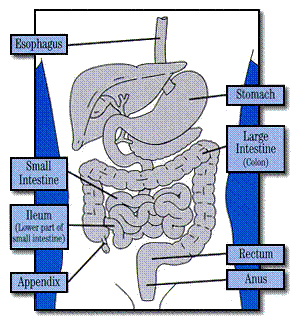
Crohn's disease is a serious inflammatory disease of the gastrointestinal (GI) tract. It predominates in the intestine (ileum) and the large intestine (colon), but may occur in any section of the GI tract. Crohn's disease usually causes diarrhea, crampy abdominal pain, often fever, and at times rectal bleeding. Loss of appetite and subsequent weight loss also may occur. Symptoms may range from mild to severe, but in general people with Crohn's disease can lead active and productive lives.
Crohn's disease is chronic. We don't know its cause. Medication currently available decreases inflammation and usually controls the symptoms, but does not provide a cure. Because Crohn's disease behaves similarly to ulcerative colitis, from which it may be difficult to differentiate, the two disorders are grouped together as inflammatory bowel disease (IBD). Unlike Crohn's disease, in which all layers of the intestine are involved, and in which there can be normal healthy bowel in between patches of diseased bowel, ulcerative colitis affects only the innermost lining (mucosa) of the colon in a continuous manner. Depending on where the involvement occurs, Crohn's disease may be referred to as Ileitis, regional enteritis, or colitis, etc. To lessen the confusion, the term Crohn's disease can be used to identify the disease wherever it occurs in the body (ileum, colon, rectum, anus, stomach, duodenum, etc.). It is referred to as Crohn's disease because Burrill B. Crohn was the first name in a three-author landmark paper published in 1932, which described the disease.
How common is inflammatory bowel disease (IBD)?
It is estimated that there may be up to 1,000,000 Americans with IBD. Males and females appear to be affected equally. While Crohn's disease afflicts people of all ages, it is primarily a disease of the young. Most cases are diagnosed before age 30, but the disease can occur in the sixth, seventh, and later decades.
Is Crohn's disease inherited?
We know that Crohn's disease tends to run in families. Studies have shown that about 20 to 25 percent of patients may have a close relative with either Crohn's or ulcerative colitis. There does not seem to be any clear-cut pattern to this familial clustering. Research actively continues in an attempt to establish a link to specific genes governing its transmission. At this time, there is no way to predict which, if any, family members will develop Crohn's disease.
What are the symptoms of Crohn's disease?
In Crohn's disease, abdominal pain and diarrhea are often the earliest signs. The pain is primarily at or below the navel in the abdomen. These symptoms follow a meal. Loss of appetite and weight, joint pains, and fever are common early signs of Crohn's disease can include sores in the anal area, including skin tags mimicking hemorrhoids, fissures (cracks), fistulas (abnormal openings connecting the bowel to the skin surface near the anus), and abscesses.
How is Crohn's disease diagnosed?
The diagnosis is suggested by the history (signs and symptoms). Additional testing to help make the diagnosis may include barium x-rays of the upper and lower GI tract, flexible sigmoidoscopy, and sometimes colonoscopy. (The last two tests permit a direct examination of the colon with a lighted tube inserted through the anus. During these tests, biopsies may be obtained to help make a diagnosis.) Laboratory tests are so helpful and include evaluation of the blood and stool.
Because Crohn's disease often mimics other conditions and symptoms may vary widely, the correct diagnosis of Crohn's disease may take some time.
What medications are used to treat this disease?
Because no medical cure for Crohn's disease exists, the goals of medical treatment are to suppress the inflammatory response, permit healing of tissue, and relieve the symptoms of fever, diarrhea, and abdominal pain.
Several groups of drugs form the mainstay of therapy for Crohn's disease today. They are:
1. Aminosalicylates: aspirin-like drugs, which include sulfasalazine and mesalamine, given both orally and rectally.
2. Corticosteroids: prednisone and methylprednisolone, available orally and rectally.
3. Immune modifiers: azathioprine, 6MP, methotrexate.
4. Antibiotics: metronidazole, ampicillin, ciprofloxacin, and others.
What is the role of surgery in Crohn's disease?
Surgery becomes necessary in Crohn's disease when medication can no longer control the symptoms, or when there is an intestinal obstruction or other complication. In most cases, the diseased segment of bowel is removed and the two ends of healthy bowel are joined together. This is called resection and anastamosis. While this surgery may allow many symptom-free years, it is not considered a cure for Crohn's disease because the disease frequently recurs at or near the site of anastomosis.
An ileostomy may also be required when surgery is performed for Crohn's disease of the colon, if the rectum is diseased and cannot be utilized for an anastomosis.
Is nutrition important in Crohn's disease?
Good nutrition is essential in any chronic disease but especially in this illness, which is characterized by reduced appetite, poor absorption, and diarrhea, all of which rob the body of fluids, nutrients, vitamins, and minerals. Restoration and maintenance of proper nutrition is a vital part of the medical management of Crohn's.
While foods appear to play no role in causing the disease, soft, bland foods may cause less discomfort than spicy or high-fiber foods when the disease is active. Except for restricting milk in lactose intolerant patients, most gastroenterologists try to be flexible in planning the diets of their Crohn's patients.
Can emotional stress trigger attacks of Crohn's disease?
Because body and mind are so closely interrelated, emotional stress can influence the course of Crohn's disease, or any other illness. Although acute emotional problems occasionally precede the onset or recurrence of Crohn's, this sequence does not imply cause and effect.
It is much more, likely that emotional distress sometimes felt by people with Crohn's is a reaction to the painful and embarrassing symptoms caused by the disease itself. Persons with Crohn's should receive understanding and emotional support from their families and from their physicians. Some patients are helped considerably by a therapist knowledgeable about inflammatory bowel disease or about chronic illness in general. Through CCFA, local support groups exist to help patients and their families cope with IBD.
Is it possible to lead a normal life with Crohn's disease?
While it is a serious chronic disease, Crohn's disease is not considered a fatal illness. Most people with the illness continue to lead useful and productive lives, even though they may be hospitalized from time to time, and may need to take medications. In between exacerbations of disease, most people feel well and are relatively free of symptoms.
Even though no medical cure for this disease exists at this time, research and educational programs funded by CCFA have already improved the health and quality of life of people with Crohn's disease. Through CCFA's continuing research efforts, much more will be learned and a cure will be found.
What causes Crohn's disease?
Researchers do not know what causes this disease. They do not believe it is caused by emotional stress or by food, or that it is transmitted directly from person to person.
Research has shown that in IBD the body's defenses are operating against some substances in the body, perhaps in the digestive tract, which they recognize as foreign. These foreign substances (antigens) may themselves cause the inflammation, or may stimulate the body's defenses to produce an inflammation that continues without control.
A major thrust of CCFA-sponsored research has been carried out in the fields of immunology, the study of the body's immune defense system, and microbiology, the study of microscopic organisms with the power to cause disease. Many scientists now believe that the interaction of an outside agent (such as a virus or bacterium) with the body's immune system may trigger the disease, or that such an agent may cause damage to the intestinal wall, initiating or accelerating the disease process.
The Crohn's & Colitis Foundation of America, Inc. (CCFA), is the only private national organization dedicated to finding a cure for the inflammatory bowel diseases such as ulcerative colitis and Crohn's disease. Funding from CCFA is in part responsible for exciting breakthroughs in the study of these diseases.
Research is currently underway to identify the genes associated with these diseases and to continue the understanding of how the immune system is activated to begin and perpetuate the disease process.
Local chapters of CCFA are actively involved in professional and patient education and support. For more information about CCFA:
Askari A. Kazmi
Consultant
2. HEART ATTACK
Heart Attack
Causes
Most heart attacks are the end result of coronary heart disease, an atherosclerotic condition that clogs coronary arteries with fatty, calcified plaques. (As blood flow is gradually impeded, the body may compensate by growing a network of collateral arteries to circumvent blockages; the presence of collateral vessels may greatly reduce the amount of heart muscle damaged by a heart attack.) In the early 1980s, researchers confirmed that the precipitating cause of nearly all heart attacks is not the obstructive plaque itself, but the sudden formation of a blood clot on top of plaque that cuts off blood flow in an already narrowed vessel.
While the step-by-step process leading to heart attack is not fully understood, major risk factors are well-established. Some can be controlled. Of these, the main ones are high blood pressure, high cholesterol, obesity, smoking, and a sedentary lifestyle. Stress is also believed to raise the risk, and exertion and excitement can act as triggers for an attack.
Men over the age of 50 with a family history of heart disease are predisposed to heart attack. High levels of estrogen are thought to protect premenopausal women fairly well from heart attack, but the risk increases significantly after menopause. Some women opt for hormone replacement therapy after menopause; the choice should be made with full knowledge that elevated estrogen levels also increase the risk for breast and uterine cancers.
Diagnostic and Test Procedures
A cardiologist relies on various tests and scans to diagnose a heart attack and to identify sites of arterial blockage and tissue damage. ECG recordings of electrical activity within the heart, supported by blood tests, provide data for an initial assessment of the patient's condition. Images of the heart and coronary arteries supplied by angiograms and radioisotope scans locate specific areas of damage and blockage. Ultrasound studies called echocardiogram evaluate the heart's function. With such data, the attending physician can pursue proper treatment and anticipate potential complications.
Treatment
Heart attack is a medical emergency that must be quickly addressed by conventional medicine. Alternative medicine cannot compete with standard drug and surgical therapy during the emergency and follow-up phases of heart attack treatment. However, alternative medicine can make valuable contributions to prevention and recovery.
Conventional Medicine
Heart attack victims are usually hospitalized in special coronary care units (CCU) for at least 36 hours. Standard drug therapy includes a painkiller such as morphine, vasodilators such as nitroglycerine to expand blood vessels, beta-adrenergic blocker drugs to calm the heart, and aspirin to reduce clotting activity. In some cases, clot-dissolving drugs like t-PA or streptokinase are also administered. These drugs are most effective if given within a few hours of heart attack onset. Emergency angioplasty, and possibly surgery, might be performed to remove a clot, reopen a clogged artery, or bypass blocked arteries.
Once past the critical phase, patients continue to receive beta blockers to slow the heart, nitrates to increase heart blood flow, and anticoagulants such as heparin, warfarin, or aspirin to prevent further clotting.
While hospitalized, heart attack patients are hooked to ECG machines for constant monitoring, in case heart rhythm abnormalities develop. If the heart starts beating too fast or too slow, various medications may be given. Some patients may be fitted with pacemakers. If a patient experiences a dangerous arrhythmia known as ventricular fibrillation, an electric shock to the chest is administered. Patients who show signs of congestive heart failure are given a variety of medications to decrease strain on the heart and to encourage the heart to beat more forcefully.
People recovering from a heart attack are urged to get back on their feet as quickly as possible, which reduces the chances of blood clots forming in the deep veins of the legs; the clots could travel through the circulatory system and lodge in the lung, creating a blockage. Gentle exercise is recommended, but nothing that requires significant exertion. Long-term recovery from heart attack requires psychological and lifestyle adjustments: Habits such as smoking, heavy drinking, and eating high-fat foods have to go.
As a preventive measure, most heart attack survivors take a daily aspirin tablet to thin the blood. Other drugs may also be prescribed, depending on the patient.
Some patients require invasive procedures to improve blood flow to the heart over the long term. The two most common procedures are angioplasty -- a catheter technique that widens clogged arteries by breaking up plaques -- and coronary bypass surgery, which diverts blood flow around clogged arteries.
Lifestyle
Regular aerobic exercise greatly enhances efforts to prevent or recover from heart attack. If you already have a heart condition, schedule a stress test before beginning an exercise program in order to determine how much exertion is safe. Heart attack survivors are advised to exercise with other people rather than alone during the first months of recovery. Many community health and recreation centers offer physician-supervised cardiovascular rehabilitation programs.
Mind/Body Medicine
Reducing stress by training the mind and body to relax may be one of the risk factors that you can control to help prevent heart attack and can aid in recovery. Many techniques promote relaxation -- among them, meditation, biofeedback, and yoga. Relaxation has also been shown to provide relief from pain, which may be encountered during the recovery period.
State of mind is another important consideration in heart attack recovery. People with a positive attitude about recovery tend to do much better. You may find that a particular mind/body technique helps you to focus on positive thoughts. You may also find, as many others have, that sharing thoughts and emotions with a support group is extremely beneficial.
Nutrition and Diet
The basic goals of a heart-healthy diet are to keep salt, sugar, and saturated fat to a minimum to reduce cholesterol, control blood pressure, and control weight. Eating magnesium-rich foods such as nuts, beans, bran, fish, and dark green vegetables may help prevent heart attack. Magnesium protects the heart directly and indirectly, by stabilizing heart rate, reducing coronary artery spasm, and combating such conditions as atherosclerosis and high blood pressure.
Much evidence suggests that unstable chemical compounds known as free radicals make the body more vulnerable to heart attack by striking the heart and coronary arteries and promoting atherosclerosis. Free radicals can be neutralized by antioxidants like vitamins A, C, and E. Fruits, vegetables, and grains supply many of the antioxidant vitamins.
Eating root vegetables such as carrots may also help prevent heart attack. These vegetables lower cholesterol over the long term and reduce blood-clotting activity.
At-Home Remedies
Remember: Having a heart attack does not make you an invalid. You can best heal your heart by remaining active.
Do not take birth-control pills if you have had a heart attack; they are linked to increased blood-clotting activity.
Consider getting a pet. Pet owners recover more quickly from heart attacks -- probably because of reduced stress levels -- and tend to live longer than people without pets. Just be sure to choose a pet that fits your lifestyle.
Prevention
Stay in touch with friends and family. Research shows that people with poor social support are more vulnerable to heart disease. Also, seek ways to control feelings of anger and hostility; these emotions may add to heart attack risk.
Assess your heart attack risk profile and make appropriate changes to diet and lifestyle early.
If you are at high risk for heart attack, have yourself tested regularly for silent ischemia.
Talk with your doctor about taking an aspirin daily. Studies have shown that this regimen significantly reduces the risk of heart attack.
Call Your Doctor If:
- You or someone you are with manifests signs of a heart attack. Seek emergency help without delay.
- Your angina (chest pain) no longer responds to medication; this may indicate that a heart attack is under way.
- Your angina attacks become more frequent, prolonged and severe; as angina worsens, the risk of heart attack increases.
- You are taking aspirin to prevent heart attack and your stool appears black and tarry. This may indicate gastrointestinal bleeding and could be a sign that aspirin has thinned your blood too much, a problem that can and should be corrected.
September 2000, Reviewers: the Cleveland Clinic
_____________________________
Askari A. Kazmi
Consultant
Causes
Most heart attacks are the end result of coronary heart disease, an atherosclerotic condition that clogs coronary arteries with fatty, calcified plaques. (As blood flow is gradually impeded, the body may compensate by growing a network of collateral arteries to circumvent blockages; the presence of collateral vessels may greatly reduce the amount of heart muscle damaged by a heart attack.) In the early 1980s, researchers confirmed that the precipitating cause of nearly all heart attacks is not the obstructive plaque itself, but the sudden formation of a blood clot on top of plaque that cuts off blood flow in an already narrowed vessel.
While the step-by-step process leading to heart attack is not fully understood, major risk factors are well-established. Some can be controlled. Of these, the main ones are high blood pressure, high cholesterol, obesity, smoking, and a sedentary lifestyle. Stress is also believed to raise the risk, and exertion and excitement can act as triggers for an attack.
Men over the age of 50 with a family history of heart disease are predisposed to heart attack. High levels of estrogen are thought to protect premenopausal women fairly well from heart attack, but the risk increases significantly after menopause. Some women opt for hormone replacement therapy after menopause; the choice should be made with full knowledge that elevated estrogen levels also increase the risk for breast and uterine cancers.
Diagnostic and Test Procedures
A cardiologist relies on various tests and scans to diagnose a heart attack and to identify sites of arterial blockage and tissue damage. ECG recordings of electrical activity within the heart, supported by blood tests, provide data for an initial assessment of the patient's condition. Images of the heart and coronary arteries supplied by angiograms and radioisotope scans locate specific areas of damage and blockage. Ultrasound studies called echocardiogram evaluate the heart's function. With such data, the attending physician can pursue proper treatment and anticipate potential complications.
Treatment
Heart attack is a medical emergency that must be quickly addressed by conventional medicine. Alternative medicine cannot compete with standard drug and surgical therapy during the emergency and follow-up phases of heart attack treatment. However, alternative medicine can make valuable contributions to prevention and recovery.
Conventional Medicine
Heart attack victims are usually hospitalized in special coronary care units (CCU) for at least 36 hours. Standard drug therapy includes a painkiller such as morphine, vasodilators such as nitroglycerine to expand blood vessels, beta-adrenergic blocker drugs to calm the heart, and aspirin to reduce clotting activity. In some cases, clot-dissolving drugs like t-PA or streptokinase are also administered. These drugs are most effective if given within a few hours of heart attack onset. Emergency angioplasty, and possibly surgery, might be performed to remove a clot, reopen a clogged artery, or bypass blocked arteries.
Once past the critical phase, patients continue to receive beta blockers to slow the heart, nitrates to increase heart blood flow, and anticoagulants such as heparin, warfarin, or aspirin to prevent further clotting.
While hospitalized, heart attack patients are hooked to ECG machines for constant monitoring, in case heart rhythm abnormalities develop. If the heart starts beating too fast or too slow, various medications may be given. Some patients may be fitted with pacemakers. If a patient experiences a dangerous arrhythmia known as ventricular fibrillation, an electric shock to the chest is administered. Patients who show signs of congestive heart failure are given a variety of medications to decrease strain on the heart and to encourage the heart to beat more forcefully.
People recovering from a heart attack are urged to get back on their feet as quickly as possible, which reduces the chances of blood clots forming in the deep veins of the legs; the clots could travel through the circulatory system and lodge in the lung, creating a blockage. Gentle exercise is recommended, but nothing that requires significant exertion. Long-term recovery from heart attack requires psychological and lifestyle adjustments: Habits such as smoking, heavy drinking, and eating high-fat foods have to go.
As a preventive measure, most heart attack survivors take a daily aspirin tablet to thin the blood. Other drugs may also be prescribed, depending on the patient.
Some patients require invasive procedures to improve blood flow to the heart over the long term. The two most common procedures are angioplasty -- a catheter technique that widens clogged arteries by breaking up plaques -- and coronary bypass surgery, which diverts blood flow around clogged arteries.
Lifestyle
Regular aerobic exercise greatly enhances efforts to prevent or recover from heart attack. If you already have a heart condition, schedule a stress test before beginning an exercise program in order to determine how much exertion is safe. Heart attack survivors are advised to exercise with other people rather than alone during the first months of recovery. Many community health and recreation centers offer physician-supervised cardiovascular rehabilitation programs.
Mind/Body Medicine
Reducing stress by training the mind and body to relax may be one of the risk factors that you can control to help prevent heart attack and can aid in recovery. Many techniques promote relaxation -- among them, meditation, biofeedback, and yoga. Relaxation has also been shown to provide relief from pain, which may be encountered during the recovery period.
State of mind is another important consideration in heart attack recovery. People with a positive attitude about recovery tend to do much better. You may find that a particular mind/body technique helps you to focus on positive thoughts. You may also find, as many others have, that sharing thoughts and emotions with a support group is extremely beneficial.
Nutrition and Diet
The basic goals of a heart-healthy diet are to keep salt, sugar, and saturated fat to a minimum to reduce cholesterol, control blood pressure, and control weight. Eating magnesium-rich foods such as nuts, beans, bran, fish, and dark green vegetables may help prevent heart attack. Magnesium protects the heart directly and indirectly, by stabilizing heart rate, reducing coronary artery spasm, and combating such conditions as atherosclerosis and high blood pressure.
Much evidence suggests that unstable chemical compounds known as free radicals make the body more vulnerable to heart attack by striking the heart and coronary arteries and promoting atherosclerosis. Free radicals can be neutralized by antioxidants like vitamins A, C, and E. Fruits, vegetables, and grains supply many of the antioxidant vitamins.
Eating root vegetables such as carrots may also help prevent heart attack. These vegetables lower cholesterol over the long term and reduce blood-clotting activity.
At-Home Remedies
Remember: Having a heart attack does not make you an invalid. You can best heal your heart by remaining active.
Do not take birth-control pills if you have had a heart attack; they are linked to increased blood-clotting activity.
Consider getting a pet. Pet owners recover more quickly from heart attacks -- probably because of reduced stress levels -- and tend to live longer than people without pets. Just be sure to choose a pet that fits your lifestyle.
Prevention
Stay in touch with friends and family. Research shows that people with poor social support are more vulnerable to heart disease. Also, seek ways to control feelings of anger and hostility; these emotions may add to heart attack risk.
Assess your heart attack risk profile and make appropriate changes to diet and lifestyle early.
If you are at high risk for heart attack, have yourself tested regularly for silent ischemia.
Talk with your doctor about taking an aspirin daily. Studies have shown that this regimen significantly reduces the risk of heart attack.
Call Your Doctor If:
- You or someone you are with manifests signs of a heart attack. Seek emergency help without delay.
- Your angina (chest pain) no longer responds to medication; this may indicate that a heart attack is under way.
- Your angina attacks become more frequent, prolonged and severe; as angina worsens, the risk of heart attack increases.
- You are taking aspirin to prevent heart attack and your stool appears black and tarry. This may indicate gastrointestinal bleeding and could be a sign that aspirin has thinned your blood too much, a problem that can and should be corrected.
September 2000, Reviewers: the Cleveland Clinic
_____________________________
Askari A. Kazmi
Consultant